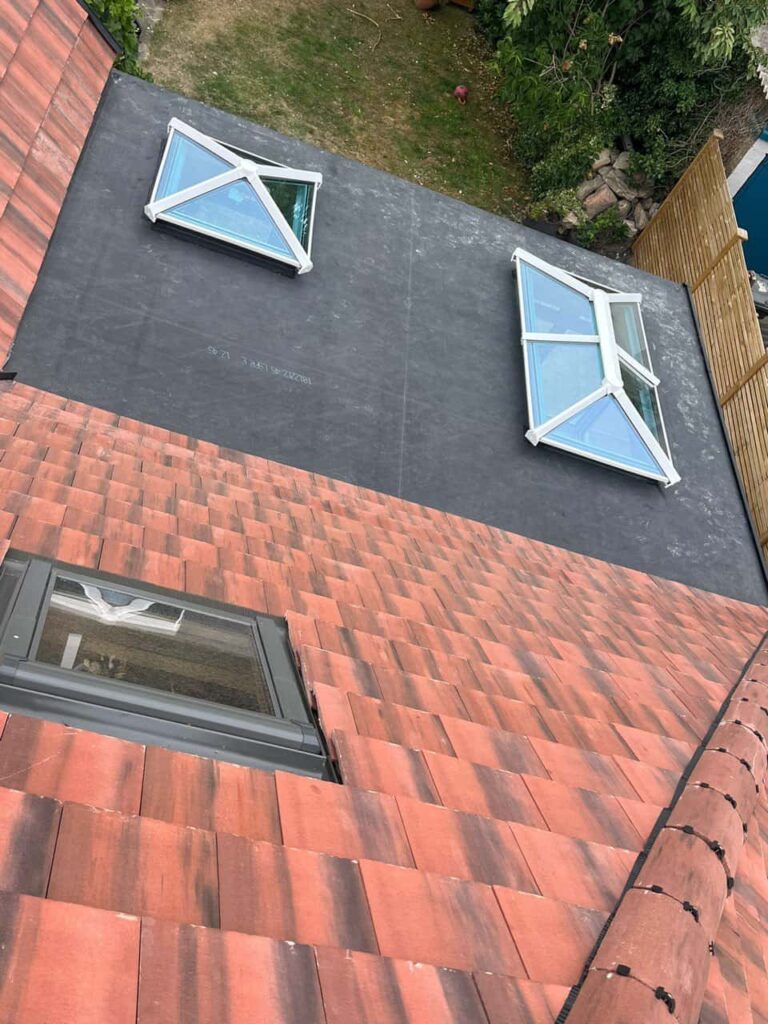
Felt roofing provides a practical protective covering for many flat and low-pitched roof areas, but like any roofing material, its condition can change over time. Cracks, splits, lifting edges and raised sections are all signs that deserve attention because they can affect the roof’s ability to keep water away from the structure beneath.
For property owners in Whetstone, Lincolnshire, understanding why felt roofing deteriorates can make it easier to recognise problems at an early stage. Damage is not always caused by one dramatic event. Ageing, repeated temperature changes, moisture, movement within the roof structure and deterioration around joints or edges can gradually weaken the covering. Identifying the cause is therefore an important part of deciding how the roof should be repaired.
Why Does Felt Roofing Start to Crack, Split or Lift?
Felt roofing works as a continuous weather-resistant covering, which means different sections need to remain properly bonded and supported. When the material deteriorates or loses adhesion, vulnerabilities can begin developing.
A small crack or lifted edge may initially appear isolated, but its significance depends on what caused it and the condition of the surrounding felt. Professional assessment can establish whether a localised repair is appropriate or whether deterioration has become more widespread.
Natural Ageing Can Gradually Change the Felt
Roofing materials are continuously exposed to outdoor conditions.
Over time, felt can become less flexible than it was when originally installed. A surface that once accommodated small amounts of movement may eventually become more susceptible to cracking.
Age alone does not automatically mean the complete roof needs replacing.
The more important considerations are the physical condition of the felt, how widespread any deterioration has become and whether the roof remains properly bonded and weather-resistant.
Temperature Changes Can Place Stress on the Surface
Roof coverings experience repeated heating and cooling.
As temperatures change, roofing materials and the construction beneath them can expand and contract slightly. Felt needs to accommodate this movement while maintaining a continuous protective layer.
Over many cycles, ageing material can become less able to respond without developing stress.
Small cracks may consequently appear in vulnerable areas before becoming more noticeable if movement continues.
Small Cracks Can Develop Into Larger Splits
A fine surface crack may not initially appear serious.
However, once the felt has started separating, continued movement and weather exposure can cause the opening to extend. Water can also reach the damaged area and contribute to further deterioration.
This is why cracks should be considered before they become substantial splits.
A relatively contained defect may require a different repair approach from a section where the felt has separated extensively.
Splits Often Develop Where the Material Is Under Stress
Felt roofing does not always deteriorate evenly across the complete surface.
Certain areas can experience greater stress because of movement, roof geometry or the way adjoining materials interact.
Splits may therefore develop around vulnerable details or where the covering has been repeatedly stressed.
Finding the cause matters because simply treating the visible opening without considering why it formed can leave the same area susceptible to further problems.
Movement in the Roof Deck Can Affect the Felt Above
The felt covering relies on the structure beneath it for support.
If sections of the roof deck move, flex or become uneven, that movement can transfer into the roofing material.
Over time, the felt may crack or split around the affected area.
A visible defect in the surface should therefore not always be treated as an isolated material problem. The condition of the supporting construction may also need to be considered.
Poor Support Can Create Localised Stress
A roofing membrane performs best when it is supported consistently.
Where the surface beneath contains irregularities or movement, particular sections of felt can experience additional stress.
This may lead to cracking, splitting or other visible deformation.
Repairing the surface without understanding the support beneath it can sometimes result in the defect returning, making proper assessment particularly important where damage repeatedly develops in the same location.
Lifted Felt Can Indicate Loss of Adhesion
Felt needs to remain appropriately bonded as part of the roofing system.
Where adhesion begins to fail, sections can start lifting away from the surface beneath. This may initially occur around an edge or joint before becoming more noticeable.
Lifted material can become increasingly vulnerable to further movement.
Once a section is no longer sitting correctly, the surrounding felt and the reason for the loss of adhesion should be examined.
Roof Edges Can Be Particularly Vulnerable
The perimeter of a felt roof is an important area because the covering needs to remain secure where it finishes.
If an edge starts becoming loose, continued exposure can encourage further lifting.
The defect may remain confined to a small section, particularly when identified early. However, where movement extends along a substantial part of the perimeter, broader repair work may need consideration.
Checking edges can therefore help identify developing problems before they become obvious across the main roof area.
Joints and Seams Need to Remain Secure
Where sections of felt meet, the joints need to maintain a continuous protective covering.
If a seam begins separating, water may find a route into the roofing system.
Small changes at a joint can sometimes be difficult to recognise from a distance. Raised edges, visible separation or changes in the surface line can indicate that closer assessment is needed.
Professional repair should consider both the affected joint and the condition of the surrounding material.
Wind Can Worsen an Existing Lifted Section
Wind does not necessarily create every felt roofing problem from scratch.
In many cases, an edge or joint may already have become slightly loose. Once air can act beneath the raised material, continued movement can place additional strain on the affected section.
A small lifted area can consequently become more pronounced.
Early repair can help address the existing weakness before more of the covering becomes affected.
Water Can Exploit Small Openings
Rainwater only needs a relatively small route to reach beneath a roof covering.
Cracks, separated joints and lifted edges can all provide potential entry points. Once water reaches beneath the felt, it may travel away from the original defect before becoming visible internally.
This can make leak diagnosis more complicated than simply locating the nearest visible crack.
Professional inspection can help trace the likely entry point and establish how much of the surrounding roof requires attention.
Standing Water Can Highlight Existing Weaknesses
Flat roofing needs suitable surface levels and drainage so rainfall can move away effectively.
Where water regularly remains in particular areas, existing cracks, joints or other weaknesses can experience prolonged moisture exposure.
Standing water does not automatically mean that the felt itself has failed.
However, recurring pooling combined with cracking, splitting or lifting deserves closer assessment because both the surface condition and underlying reason for the water accumulation may need attention.
Blocked Drainage Routes Can Contribute to Roof Problems
Leaves, dirt and other debris can interfere with the way water leaves a roof.
When drainage routes become restricted, water may remain on the surface longer than intended.
This can make existing vulnerabilities more significant and can conceal smaller defects beneath accumulated debris.
Keeping drainage areas clear also makes it easier to observe the actual condition of the felt and identify changes before they become more extensive.
Blisters Can Indicate Changes Beneath the Felt
Not every felt roofing defect appears as an open crack.
Raised or blistered areas can develop where the material is no longer lying flat against the surface beneath. These areas should not simply be pressed down or punctured without understanding what has caused them.
A blister changes the profile of the roof covering and may become vulnerable to further deterioration.
Professional assessment can determine whether the problem is isolated and how the affected area should be treated.
Bubbles and Raised Sections Should Be Monitored
A raised area may initially remain intact without any obvious water ingress.
However, its position can place additional stress on the felt as temperatures change and the material moves.
If cracking develops across the raised section, the roof can become more vulnerable.
This is why changes in the shape of the felt can be useful early warning signs even when no active leak is currently visible.
Surface Deterioration Can Make the Felt More Vulnerable
The appearance and texture of felt roofing can gradually change through prolonged exposure.
As the surface deteriorates, it may become increasingly susceptible to cracking and other damage.
A small area of surface change does not necessarily mean that the roof requires extensive work.
Widespread deterioration accompanied by splitting, lifting or repeated leaks is more significant and should be assessed as part of the overall roof condition.
Foot Traffic Can Damage Vulnerable Felt
Roofing felt is designed primarily as a weather-resistant covering rather than a general walking surface.
Unnecessary foot traffic can place localised pressure on the material, particularly if the felt is already ageing or the surface beneath is uneven.
Damage can include scuffing, indentations or more substantial splits.
Where access is necessary, the condition and construction of the roof need to be taken into account to avoid creating additional defects.
Objects on the Roof Can Cause Localised Damage
Branches, debris or other objects can sometimes damage a felt roof.
The resulting defect may be relatively small, such as a puncture or localised tear, but it can still compromise the continuity of the covering.
The surrounding material should be checked after visible impact damage.
This helps establish whether repair can remain confined to the immediate area or whether neighbouring felt has also been affected.
Changes Around Roof Details Can Cause Localised Weaknesses
Flat roofs often contain edges, outlets, upstands or other details where the felt needs to form a dependable connection.
These areas can experience different stresses from the main open surface.
A crack or lifted section close to a roof detail should therefore be considered carefully.
The visible damage may be connected to movement or deterioration within the complete detail rather than being an isolated defect in the middle of the felt.
Previous Repairs Can Provide Useful Information
An existing repair does not automatically indicate a problem.
Where it has been completed appropriately and remains stable, the repaired section may continue performing as intended.
However, repeated cracking or lifting around the same location deserves investigation.
This pattern can suggest that the underlying cause has not been fully addressed or that surrounding felt is also deteriorating.
Repeated Splitting in One Area Needs Further Investigation
If the same section continues developing splits after repair, repeatedly treating only the visible opening may provide limited benefit.
Movement beneath the covering, poor support or deterioration within adjoining materials could be contributing to the problem.
A professional inspection can look beyond the surface defect.
Understanding why damage keeps returning is essential when trying to provide a more lasting repair.
Internal Damp Patches Can Indicate Felt Roof Damage
Sometimes the first sign of a felt roofing problem appears inside the property.
A damp patch, water mark or discolouration can indicate that moisture has entered somewhere through the roof covering.
The external defect may not sit directly above the visible internal mark.
Water can travel along parts of the construction before becoming apparent, making systematic leak investigation important.
An Intermittent Leak Still Deserves Attention
Some felt roof leaks appear only during prolonged or wind-driven rainfall.
Once conditions improve, the internal area may dry and the problem can seem to have disappeared.
Intermittent water ingress still indicates that the roofing system has a vulnerability.
Waiting for the leak to become constant can allow the original defect more time to deteriorate.
Several Small Defects Can Indicate Wider Deterioration
One localised crack is very different from numerous cracks, lifted seams and raised sections appearing across the same roof.
The pattern of defects provides important information about overall condition.
Where damage remains confined, targeted repair may be suitable.
Where similar deterioration is appearing throughout substantial sections, broader work may need to be considered rather than repairing every defect individually.
Localised Felt Roof Repairs Can Often Be Appropriate
Not every cracked or lifted felt roof requires complete replacement.
A localised repair may be appropriate where:
- a small section has cracked or split;
- damage is confined to one identifiable area;
- a limited edge or joint has lifted;
- surrounding felt remains in suitable condition;
- the underlying support is sound;
- the source of water ingress can be clearly identified;
- previous areas of the roof remain stable.
Assessment is important because it establishes whether the visible problem is genuinely isolated.
Widespread Problems Require a Broader Assessment
A different approach may be needed where deterioration affects substantial areas of the roof.
Numerous splits, repeated lifting, extensive surface deterioration or recurring leaks can indicate that the problem is no longer confined to one section.
In these circumstances, continuing to patch individual defects may not address the overall condition.
A professional assessment can determine whether repair remains practical or whether a more comprehensive roofing solution is appropriate.
Warning Signs That Felt Roofing Needs Attention
Property owners should consider having a felt roof assessed if they notice:
- visible cracks in the surface;
- splits that appear to be increasing;
- lifted edges;
- separating joints or seams;
- blisters or raised areas;
- sections that no longer lie flat;
- repeated damage around previous repairs;
- damp patches beneath the roof;
- recurring water ingress;
- several defects appearing across the same roof area.
Recognising these signs early can help establish the cause while the problem may still be relatively contained.
Why Early Felt Roof Repairs Matter
Small defects can become more difficult to manage when they remain exposed.
A crack can extend, a loose edge can lift further and a separated joint can allow increasing amounts of water beneath the covering.
Early investigation provides an opportunity to establish why the defect has developed.
Where the surrounding roof remains sound, this can allow targeted repairs to protect serviceable sections rather than waiting for deterioration to spread.
Why Professional Assessment Is Important
The visible condition of felt does not always reveal what is happening beneath it.
A crack may have resulted from simple localised deterioration, or it could be connected to movement within the roof deck. A lifted section might involve adhesion failure, while recurring water ingress could originate from a nearby joint or roof detail.
Professional roof assessment considers the complete affected area.
This makes it possible to recommend work based on the underlying cause rather than simply covering the most obvious symptom.
Felt Roofing Repairs in Whetstone, Lincolnshire
At Whetstone Roofing Repairs, we understand that cracks, splits and lifted sections can have several different causes.
Some defects remain localised and can be addressed through targeted repair, while repeated or widespread deterioration may require closer investigation of the surrounding felt and supporting roof construction.
For property owners in Whetstone, Lincolnshire, professional assessment can help identify why felt roofing has deteriorated and determine the appropriate repair approach based on its actual condition.
Conclusion
Felt roofing can crack, split or lift for several reasons, including natural ageing, repeated temperature changes, movement within the supporting roof structure, deterioration around joints and edges, loss of adhesion and existing weaknesses exposed by weather.
The pattern of damage is often more important than one individual defect. A single crack or lifted edge may remain suitable for localised repair when the surrounding roof is sound. Numerous splits, repeated lifting or recurring leaks can indicate that deterioration has become more widespread.
Addressing these warning signs early allows the cause to be investigated before the affected area has more opportunity to deteriorate.
If you have noticed cracks, splits, lifting felt or recurring water ingress at your property in Whetstone, Lincolnshire, contact Whetstone Roofing Repairs. We can assess the affected roof area and recommend an appropriate repair based on the condition and cause of the problem.
Call us on: 0116 478 6791
Click here to find out more about Whetstone Roofing Repairs
Click here to complete our contact form and see how we can help with your roofing needs.